

MakBow
Well-known member
- Joined
- Aug 31, 2025
- Messages
- 350
- Points
- 63
This is a rant.
Something I notice is that when authors usually ask for advice when it comes to power systems (as someone who looks at many posts regarding them) I often see the question regarding: Is this good/complex/understandable?
It's something I understand (as someone who has done this before), but after a while, I realized the key to creating a power system.
1. The Power System must embody the world
Power systems must work well in a story. A good power system is one that works with the story, a great power system cannot be separated from it.
Examples
Jujutsu Kaisen: A good power system that involves the controlling of cursed energy, allowing one to fight against curses, with binding vows, innate techniques, inherited techniques, black flash, simple domain, domain expansions. While they work in the story, you can generally just have these same things in many other worlds
Hunter X Hunter: A great power system that involves controlling Nen, this system granting 6 nen-user types, each with their own specialty. What allows this power system to embody the world itself is that Nen is hidden by the Hunters Association to maintain societal balance, reinforcing the show’s themes of control, responsibility, and the dangers of unchecked power. And the show clearly shows what uncheck power does.
2. It can tell a story alongside the story
A power system should be able to tell the story alongside the story (unless it's not needed).
Examples
Solo Leveling: ....Do I need to say anything?
LOTM: The power system is great because of its ability to tell a story about the horrors of cognizance and how ignorance can very well be bliss. As Klien ascends higher in the sequences, he is forced to comprehend truths that would break anyone, gripping his humanity as he slowly feels it slips away from him. The power system alone conveys it, but the story hammers home and elevates its ideas.
3. The power system should be as it needs to be
People often question, "Is my power system complex?", when that they should be asking is, "Does this work in the context of my story?" A power system should only be as complex as it needs to be, maybe to the point that it's simple.
I often don't try to force complexity if it doesn't need to be complex, because a simple power system can work just as fine.
After all, what matters most isn't the power system itself, it's how it's executed.
Beyblade is a perfect example of creating a simple magic system:
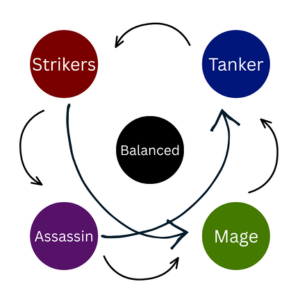
As you can see, the system is simple and not complex at all, however, this set up can work and be executed pretty easily to allow for diverse fights among characters. Each variant has its advantages against the others, and this not only applies to the characters, but also the monsters, forcing stakes.
That's why I love Beybalde.
At face value, it's simple, but can be executed well with how these types clash with one another with their unique abilities.
IThats the end.
If that is more you wish to add, please do.
I'm not trying to sound like a pro writer, because I'm not. This is more so just me spreading what I learn as I grow as a writer.
Something I notice is that when authors usually ask for advice when it comes to power systems (as someone who looks at many posts regarding them) I often see the question regarding: Is this good/complex/understandable?
It's something I understand (as someone who has done this before), but after a while, I realized the key to creating a power system.
1. The Power System must embody the world
Power systems must work well in a story. A good power system is one that works with the story, a great power system cannot be separated from it.
Examples
Jujutsu Kaisen: A good power system that involves the controlling of cursed energy, allowing one to fight against curses, with binding vows, innate techniques, inherited techniques, black flash, simple domain, domain expansions. While they work in the story, you can generally just have these same things in many other worlds
Hunter X Hunter: A great power system that involves controlling Nen, this system granting 6 nen-user types, each with their own specialty. What allows this power system to embody the world itself is that Nen is hidden by the Hunters Association to maintain societal balance, reinforcing the show’s themes of control, responsibility, and the dangers of unchecked power. And the show clearly shows what uncheck power does.
2. It can tell a story alongside the story
A power system should be able to tell the story alongside the story (unless it's not needed).
Examples
Solo Leveling: ....Do I need to say anything?
LOTM: The power system is great because of its ability to tell a story about the horrors of cognizance and how ignorance can very well be bliss. As Klien ascends higher in the sequences, he is forced to comprehend truths that would break anyone, gripping his humanity as he slowly feels it slips away from him. The power system alone conveys it, but the story hammers home and elevates its ideas.
3. The power system should be as it needs to be
People often question, "Is my power system complex?", when that they should be asking is, "Does this work in the context of my story?" A power system should only be as complex as it needs to be, maybe to the point that it's simple.
I often don't try to force complexity if it doesn't need to be complex, because a simple power system can work just as fine.
After all, what matters most isn't the power system itself, it's how it's executed.
Beyblade is a perfect example of creating a simple magic system:
As you can see, the system is simple and not complex at all, however, this set up can work and be executed pretty easily to allow for diverse fights among characters. Each variant has its advantages against the others, and this not only applies to the characters, but also the monsters, forcing stakes.
That's why I love Beybalde.
At face value, it's simple, but can be executed well with how these types clash with one another with their unique abilities.
IThats the end.
If that is more you wish to add, please do.
I'm not trying to sound like a pro writer, because I'm not. This is more so just me spreading what I learn as I grow as a writer.


