I hope you read my novel *The Exodia Saga* and provide any feedback for improvement.

Dani007

New member
Joined
Mar 9, 2026
Messages
13
Points
3
 

Eldoria

Well-known member
Joined
Jun 14, 2025
Messages
1,674
Points
113
Well, I have some feedback to improve your fiction packaging for engagement:

(1) Create a structured chapter numbering format to make it easier for readers to navigate. For example, Vol 1 Ch 1: Prologue - Chapter Title.

(2) Maximize 25 tags according to the tropes used in your fiction to maximize accessibility.

(3) Your synopsis is more like a vague plot summary lacking a hook to make new readers care. Turn your synopsis into an emotional experience for readers to make them care about your story. You can use the following formula:

Relatable protagonist identity + main conflict + stakes + threat/challenge.

The protagonist's identity should be relatable to readers, have a human side that touches the reader's feelings. For example, your protagonist is an orphan, has a sad past and other fragile sides.

The main conflict is the main premise of your fiction that drives your plot so readers know where your story is going.

Stakes provide tension and suspense in your story. For example, your protagonist struggles against fate, failure leads to death. Or it could be the protagonist struggles to protect the people he loves, failure will threaten the lives of those he loves.

Threats/challenges indicate dangers, tests and obstacles for your protagonist in facing the conflict, as well as foreshadowing the main antagonist.

Reading your story...

Well, I've read 6 chapters of your fiction in one go without repeating. Here are my impressions:

(1) Your scene flow is clear. Your narrative provides a clear, coherent, and logical sequence of scenes: X to Y, Y to Z, etc. The scene flow is indeed linear but is easy for readers to follow without getting lost.

(2) Your prose tends to use transparent glass prose. The use of concrete diction, active verbs, and the use of minimalist and functional metaphors allow readers to immediately perceive your story and follow the plot. You have successfully avoided the trap of purple prose, which is flowery prose that can confuse readers.

(3) Your narrative knows when to use POV according to the narrative's needs. You know how to use the first POV to provide an emotional experience through the protagonist. You know how to use the third omniscient POV to describe a fight scene objectively.

Although the transition between POVs is still rough, only separated by --- symbol, the reader is not confused. In short, you know how to use narrative camera (POV) to describe the scene.

(4) You have successfully avoided head hopping which makes the reader confused about who is speaking and acting. You consistently use POV based on the character's experience. This allows the reader to focus on how the scene is perceived by the character.

Even when your POV is an omniscient third person, you consistently follow the character's camera. You don't switch characters randomly and suddenly.

The four points above can be considered your narrative strengths. Now let's move on to your narrative weaknesses.

(5) Chapter 1 lacks a hook, more like exposition through meta commentary. If you want to encourage further reading, then chapters 1 and 2 should be made into a single chapter. Combining chapters 1 and 2 would make your chapter a prologue similar to a mainstream manhwa. This is a generic formula but has proven effective in providing a hook.

In chapter 1, you present the game exposition through the explanation of the narrator "I". Even though this is exposition, it doesn't feel like an infodump. Because the reader feels like they are listening to a gamer's story.

Then you can connect the premise of isekai or the narrator's transmigration to the game by providing a plot twist where the narrator transmigrates to the game world just like the end of chapter 2.

This way, the reader can feel as if they are sucked into the game just like the narrator experienced.

(6) The paragraph format is tiring. Your chapters are full of giant paragraphs that are longer than mobile screens. This is not good, readers can get tired reading paragraphs this long. You are lucky that your flow of scenes is linear. Otherwise, readers might drop off as early as chapter 1.

You need to tidy up your paragraphs. You can use the standard light novel format with 3-5 sentences per paragraph.

(7) Your chapters tend to be tell-heavy. Even though you use an objective omniscient narrator, your narration tends to explain to the reader, instead of letting the scenes speak. The result?

Reader knows what is happening in your story. But they are not there to experience the world of the story. The reader is positioned as a passive listener rather than an active subject in interpreting your narrative.

I don't know... if this style of imagery is your artistic choice or not. If so, you can ignore this suggestion. If not, you can consider changing your imagery to immersive narrative through deep POV.

Revisit the principle of show it, don't tell it. Use the 5 senses + physiological reactions (like the sensation of hunger, etc.) + feelings + the protagonist's mental state in narrating the scene.

So that the reader not only knows the protagonist standing in front of the class, but the reader also feels the atmosphere in front of the class, the noisy voices of the students and the mental state of the protagonist in that situation. Make the reader feel as if he is standing as the protagonist there.

In addition, you need to avoid raw emotions such as mentioning anxiety, sadness, happiness, etc. Change raw emotions into body language and the psychological reactions of the protagonist. So, readers can conclude what the protagonist feels.

(8) Atmosphere is less living. If you want the scene to feel more lively, you need to give texture to the environment around your character.

For example, narrate the noisy sound of the crowd on the stands, the sound of metal clanking, the smell of sweat to build an atmosphere of tension in the fight.

Make your protagonist interact with your environment. This can also prevent white space syndrome which makes the visualization of the scene blurry.

Well, that's all the feedback from me. You can consider this criticism and suggestion or not.

Regards.

 
Last edited:

Dani007

New member
Joined
Mar 9, 2026
Messages
13
Points
3
The chapter numbering system hadn't occurred to me... Thanks for pointing that out, I'll make sure to reorganize it... As for the clues, I've done what you asked... Regarding the summary, well, I really couldn't find a more suitable one, especially since I don't want to reveal the plot from the beginning, particularly the protagonist's past and origins, as this is important and will drive the events step by step, adding an air of mystery to his background... As for the motivation, don't worry, it will appear after two or three chapters, and it's a very important motivation in addition to his initial one, which is ambition. As for explaining the game, I preferred not to take that common approach. Instead, I'll take it slowly, from the Eastern Continent to the Central Continent, then to ***, and then to ****. I really don't want to reveal too much, especially since the world is very large and expansive compared to other Academy novels, and the balance of power is greater and more diverse, not just something unclear or weak...
Well, I have some feedback to improve your fiction packaging for engagement:

(1) Create a structured chapter numbering format to make it easier for readers to navigate. For example, Vol 1 Ch 1: Prologue - Chapter Title.

(2) Maximize 25 tags according to the tropes used in your fiction to maximize accessibility.

(3) Your synopsis is more like a vague plot summary lacking a hook to make new readers care. Turn your synopsis into an emotional experience for readers to make them care about your story. You can use the following formula:


The protagonist's identity should be relatable to readers, have a human side that touches the reader's feelings. For example, your protagonist is an orphan, has a sad past and other fragile sides.

The main conflict is the main premise of your fiction that drives your plot so readers know where your story is going.

Stakes provide tension and suspense in your story. For example, your protagonist struggles against fate, failure leads to death. Or it could be the protagonist struggles to protect the people he loves, failure will threaten the lives of those he loves.

Threats/challenges indicate dangers, tests and obstacles for your protagonist in facing the conflict, as well as foreshadowing the main antagonist.

Reading your story...

Well, I've read 6 chapters of your fiction in one go without repeating. Here are my impressions:

(1) Your scene flow is clear. Your narrative provides a clear, coherent, and logical sequence of scenes: X to Y, Y to Z, etc. The scene flow is indeed linear but is easy for readers to follow without getting lost.

(2) Your prose tends to use transparent glass prose. The use of concrete diction, active verbs, and the use of minimalist and functional metaphors allow readers to immediately perceive your story and follow the plot. You have successfully avoided the trap of purple prose, which is flowery prose that can confuse readers.

(3) Your narrative knows when to use POV according to the narrative's needs. You know how to use the first POV to provide an emotional experience through the protagonist. You know how to use the third omniscient POV to describe a fight scene objectively.

Although the transition between POVs is still rough, only separated by --- symbol, the reader is not confused. In short, you know how to use narrative camera (POV) to describe the scene.

(4) You have successfully avoided head hopping which makes the reader confused about who is speaking and acting. You consistently use POV based on the character's experience. This allows the reader to focus on how the scene is perceived by the character.

Even when your POV is an omniscient third person, you consistently follow the character's camera. You don't switch characters randomly and suddenly.

The four points above can be considered your narrative strengths. Now let's move on to your narrative weaknesses.

(5) Chapter 1 lacks a hook, more like exposition through meta commentary. If you want to encourage further reading, then chapters 1 and 2 should be made into a single chapter. Combining chapters 1 and 2 would make your chapter a prologue similar to a mainstream manhwa. This is a generic formula but has proven effective in providing a hook.

In chapter 1, you present the game exposition through the explanation of the narrator "I". Even though this is exposition, it doesn't feel like an infodump. Because the reader feels like they are listening to a gamer's story.

Then you can connect the premise of isekai or the narrator's transmigration to the game by providing a plot twist where the narrator transmigrates to the game world just like the end of chapter 2.

This way, the reader can feel as if they are sucked into the game just like the narrator experienced.

(6) The paragraph format is tiring. Your chapters are full of giant paragraphs that are longer than mobile screens. This is not good, readers can get tired reading paragraphs this long. You are lucky that your flow of scenes is linear. Otherwise, readers might drop off as early as chapter 1.

You need to tidy up your paragraphs. You can use the standard light novel format with 3-5 sentences per paragraph.

(7) Your chapters tend to be tell-heavy. Even though you use an objective omniscient narrator, your narration tends to explain to the reader, instead of letting the scenes speak. The result?

Reader knows what is happening in your story. But they are not there to experience the world of the story. The reader is positioned as a passive listener rather than an active subject in interpreting your narrative.

I don't know... if this style of imagery is your artistic choice or not. If so, you can ignore this suggestion. If not, you can consider changing your imagery to immersive narrative through deep POV.

Revisit the principle of show it, don't tell it. Use the 5 senses + physiological reactions (like the sensation of hunger, etc.) + feelings + the protagonist's mental state in narrating the scene.

So that the reader not only knows the protagonist standing in front of the class, but the reader also feels the atmosphere in front of the class, the noisy voices of the students and the mental state of the protagonist in that situation. Make the reader feel as if he is standing as the protagonist there.

In addition, you need to avoid raw emotions such as mentioning anxiety, sadness, happiness, etc. Change raw emotions into body language and the psychological reactions of the protagonist. So, readers can conclude what the protagonist feels.

(8) Atmosphere is less living. If you want the scene to feel more lively, you need to give texture to the environment around your character.

For example, narrate the noisy sound of the crowd on the stands, the sound of metal clanking, the smell of sweat to build an atmosphere of tension in the fight.

Make your protagonist interact with your environment. This can also prevent white space syndrome which makes the visualization of the scene blurry.

Well, that's all the feedback from me. You can consider this criticism and suggestion or not.

Regards.
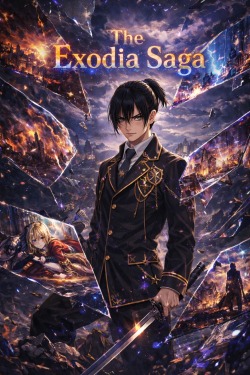
Regarding the protagonist's human side, don't worry, I'll explain that in future chapters. I want to help the reader understand the protagonist's character and why they are the way they are. I don't want to present everything at once, otherwise the reader won't truly grasp my meaning. I've read several novels where the protagonist's character and the world are explained directly, but I didn't like that style of narration. I don't know about others, but I don't prefer it, and I'll follow my own approach in developing the protagonist's character. I greatly appreciate your advice. As for the issue of paragraphs, yes, I've corrected that habit, but sometimes I find myself having to put them in a single paragraph of 5 or 6 lines. You can read chapter nine and give me your opinion, please. Regarding combining chapters one and two, I was a little hesitant, but it was a wise move on your part, so I went ahead with it because the first chapter is truly the novel itself. Thank you so much for your feedback; I will take everything into consideration.
 
Last edited:
Top